How to Take an Accurate Blood Pressure Reading at Home
A simple, repeatable routine for home blood pressure readings: how to sit, where to place the cuff, what to avoid beforehand, and why technique is everything.
This article is educational content, not medical advice. Always talk to a healthcare professional about your blood pressure.
A blood pressure reading is only as useful as the way it was taken. The good news is that getting a reliable, repeatable number at home is not complicated. It just rewards a little consistency. Here is a calm routine you can follow every time.
Before you measure
The fifteen minutes before a reading matter more than most people realize. To give yourself the cleanest number:
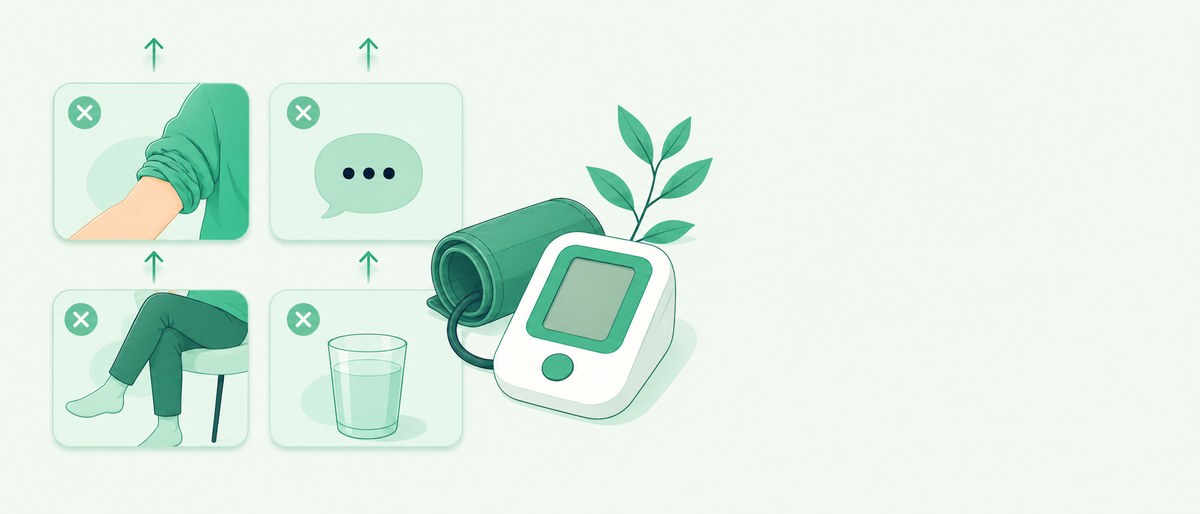
- Avoid caffeine, exercise and smoking for about 30 minutes beforehand.
- Empty your bladder: a full one can nudge a reading up.
- Sit quietly for five minutes first. Walking in and measuring immediately tends to read high.
- Skip the conversation. Talking, texting or even active listening raises the number while you measure.
These are not fussy rules for their own sake. They simply remove the easy sources of noise, so the reading reflects your body at rest rather than the rush you were in.
How to sit
Position is where most home readings quietly go wrong. Aim for this setup:
- Feet flat on the floor, legs uncrossed. Crossing your legs can raise the number.
- Back supported by the chair, not perched on a stool or the edge of a sofa.
- Arm resting on a table, so your upper arm is roughly at heart level. An arm dangling at your side or held up in the air both distort the result.
- Stay relaxed and quiet through the measurement.
A useful mental image: supported back, supported arm, both feet down. If all three are true, you have removed the biggest avoidable errors.
The cuff
Cuff details have an outsized effect:
- Use the right size. A cuff that is too small reads high; too large reads low. If your monitor came with one size and it feels wrong, most brands sell alternatives.
- Place it on bare skin, not over a sleeve.
- Position the cuff just above the bend of your elbow, snug but not tight. You should be able to slip a fingertip underneath.
- Use the same arm each time. Readings can differ between arms, so pick one and stay with it for fair comparisons.
Take more than one
Single readings bounce around, so a small routine pays off:
- Take two or three readings, about a minute apart, and note them.
- It is normal for the first to be a little higher; your body settles over the next couple.
- Many people record the average of the readings, or simply log each one and let the trend speak for itself.
Be consistent about timing
Because blood pressure naturally drifts through the day, when you measure shapes what you see. You do not need to measure constantly. You need to measure at similar times. A common rhythm is once in the morning before medication and food, and once in the evening. Whatever you choose, keeping the timing steady is what makes one week comparable to the next.
Write it down right away
A reading you do not record is a reading you will misremember. Note the numbers, the time, which arm you used, and anything notable: poor sleep, a stressful day, a missed dose. Those small notes are often what make a surprising reading make sense later. Logging in the moment, rather than from memory at your next appointment, is the difference between a guess and a record.
Consistency beats perfection
You will never control every variable, and you do not need to. The aim is a routine you can repeat: same arm, same posture, similar time, two or three readings, written down. Do that, and the occasional odd number stops being worrying. It becomes just one point on a trustworthy trend.
Technique is the whole game with home monitoring. Get the routine right, keep it boring and repeatable, and the numbers you collect become genuinely worth talking about with your doctor.
Sources
Keep your readings in one calm place
BPlus does the logging with you: record by hand or scan your monitor, watch your trends, and export a doctor-ready report when you need one.
Medical disclaimer. BPlus is a wellness and informational tool that helps you record, organize and understand your blood pressure readings. It is not a medical device and does not diagnose, treat, cure or prevent any disease. BPlus does not measure blood pressure on its own. Always consult a qualified healthcare professional. Readings are not a substitute for a clinically validated blood pressure monitor.