Does Caffeine Raise Blood Pressure? How Long It Lasts
Yes, caffeine briefly raises blood pressure, usually within 30 minutes and lasting a few hours. Regular coffee drinkers build tolerance and feel it less.
This article is educational content, not medical advice. Always talk to a healthcare professional about your blood pressure.
Yes, caffeine raises blood pressure, but the effect is short-lived. A dose of caffeine usually nudges your numbers up within about 30 minutes, peaks after one to two hours, and fades over the next few hours. For most people it's a temporary bump, not a lasting change, and habitual coffee drinkers feel it far less than someone who rarely touches it.
The reason the spike matters is timing, not danger. Caffeine is a stimulant, and one of its effects is a brief rise in blood pressure that shows up soon after your first cup and can last several hours. A frequently cited pharmacology review found that 200 to 300 mg of caffeine, roughly two to three cups of coffee, produced a mean increase of about 8 mmHg systolic and 6 mmHg diastolic, with the rise appearing in the first hour and lasting three hours or more. That is enough to push an otherwise normal reading into a higher category if you measure at the wrong moment, which is exactly why the standard advice is to keep caffeine away from your reading time.
How long does the caffeine effect last?
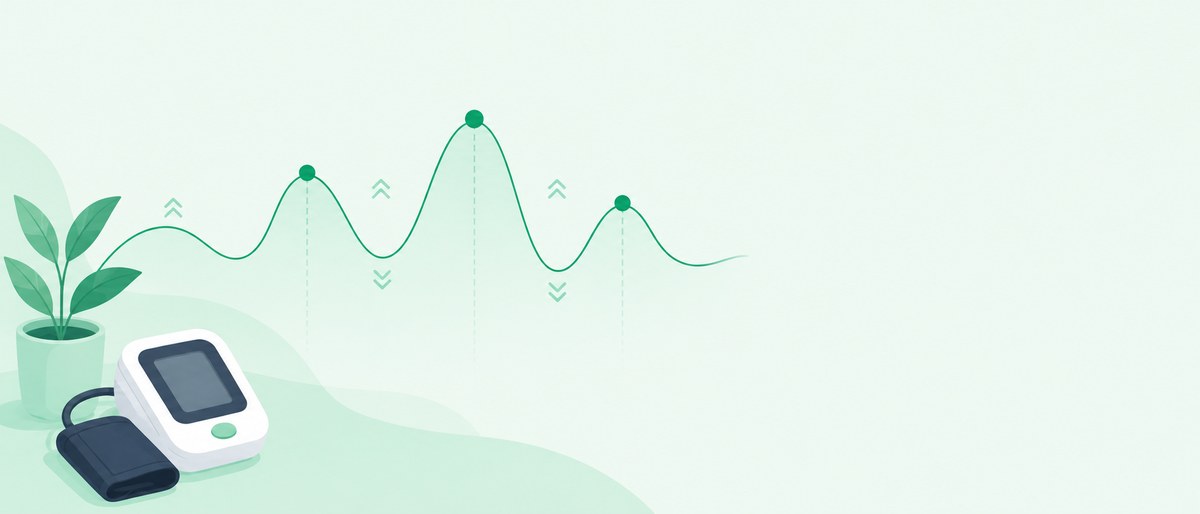
The response follows a predictable curve. Blood pressure starts climbing soon after caffeine reaches your bloodstream, tops out while caffeine levels are highest, then drifts back down as your body clears it.
| Time after caffeine | What is happening to blood pressure |
|---|---|
| Within 30 minutes | The rise begins |
| 1 to 2 hours | Peak effect, when caffeine levels are highest |
| 3 to 4+ hours | Gradually returns to baseline |
Because the peak sits one to two hours out, a reading taken right after your morning coffee catches the effect near its worst. Waiting is the simplest fix. The American Heart Association lists no caffeine in the 30 minutes before a measurement as one of its core rules, alongside an empty bladder and five minutes of quiet rest.
Does caffeine cause long-term high blood pressure?
This is the part people worry about most, and the reassuring answer is that a short spike isn't the same as chronic hypertension. Mayo Clinic notes that while caffeine can cause a sharp short-term jump, it isn't generally thought to raise the long-term risk of high blood pressure. The temporary rise and a sustained elevation are two different things, and moderate coffee drinking has not been shown to give people hypertension over time.
There is one sensible caution. If you already have high blood pressure, or if your doctor has asked you to watch it closely, it is worth knowing your own response rather than assuming caffeine does nothing. Some people are simply more sensitive to it than others.
Why regular coffee drinkers barely notice
If you drink coffee every day, your blood pressure probably reacts less to it than a first-timer's would. The short-term spike shows up mainly in people who do not consume caffeine often. Regular drinkers develop a tolerance, so the same cup that would jolt an occasional drinker produces a smaller and smaller change over time.
That tolerance is real, but it doesn't fully cancel the effect, and it's not a reason to skip the pre-reading wait. Even a habitual drinker can show a measurable bump on a day they have more than usual, or a stronger brew, or an energy drink instead of their normal coffee. The safe habit is the same for everyone: leave a gap between the cup and the cuff.
How to tell if caffeine affects your own numbers
You don't have to guess. Mayo Clinic suggests a simple self-test: take a reading before you have any caffeine, then take another 30 to 120 minutes afterward. If the second number is meaningfully higher, caffeine is likely nudging your pressure up, and you are more sensitive than average.
This is where careful logging turns a vague worry into a clear answer. If you note what you drank and when next to each reading, a pattern either shows up in your trend or it does not. Our guide to why your readings vary from one moment to the next covers the other everyday factors that move the number, and the checklist for an accurate reading at home walks through the full pre-measurement routine so caffeine is not the only variable you are controlling for.
One number worth remembering: a genuine reading above 180/120 mmHg is not something to blame on coffee. If a reading that high does not come down after a few minutes of rest and a repeat measurement, or you have symptoms like chest pain or trouble speaking, seek medical help immediately.
Logging this kind of pattern is what BPlus is built for. You enter each systolic, diastolic and pulse reading by hand, or scan your monitor's display with the camera so the numbers go in without typing, and the time and date are stamped for you. Add a quick note like "after coffee" to any reading, then let the app chart your trend and sort each entry into the standard categories. Over a week or two you can see for yourself whether your post-caffeine readings really do sit higher. BPlus keeps everything on your device, works offline and needs no account. It is a wellness and logging tool, not a medical device: it does not measure, diagnose or treat blood pressure, and it is no substitute for professional care. What it does is make your own caffeine response easy to spot, so the advice above becomes something you can check rather than take on faith.
Mini-FAQ
How long should I wait after coffee to check my blood pressure? At least 30 minutes, and longer is better since the effect can peak one to two hours in. The American Heart Association counts no caffeine within 30 minutes of a reading as a basic measurement rule, so building that gap into your routine keeps the number from being falsely high.
How much does caffeine raise blood pressure? In studies, a moderate dose of about 200 to 300 mg, or two to three cups of coffee, raised systolic pressure by roughly 8 mmHg and diastolic by about 6 mmHg on average. The size of the effect varies by person and is smaller in people who drink caffeine regularly.
Is it safe to drink coffee if I have high blood pressure? For most people, moderate coffee is fine, because caffeine has not been shown to cause long-term hypertension. If you are sensitive to it or your pressure is hard to control, run the before-and-after self-test and talk to your clinician about how much is right for you.
Does decaf raise blood pressure too? Decaf contains only a small amount of caffeine, so its effect on blood pressure is minimal for most people. If you are doing the timing self-test, switching to decaf is a useful way to check whether it is the caffeine or the ritual of a warm drink that lines up with your readings.
Sources
Keep your readings in one calm place
BPlus does the logging with you: record by hand or scan your monitor, watch your trends, and export a doctor-ready report when you need one.
Medical disclaimer. BPlus is a wellness and informational tool that helps you record, organize and understand your blood pressure readings. It is not a medical device and does not diagnose, treat, cure or prevent any disease. BPlus does not measure blood pressure on its own. Always consult a qualified healthcare professional. Readings are not a substitute for a clinically validated blood pressure monitor.