Blood Pressure Log Template for Doctor Visits: What to Include
A doctor-ready blood pressure log records date, time, arm, and two readings per sitting. Here is every field that earns its place, plus the 7-day protocol.
This article is educational content, not medical advice. Always talk to a healthcare professional about your blood pressure.
A blood pressure log worth handing to your doctor is more than a grid of numbers. At a minimum it records the date, the time of day, the arm you used, and two readings taken a minute apart, with room for a short note. Get those columns right and a week of entries tells your clinician far more than a single clinic reading ever could.
The format doctors actually trust
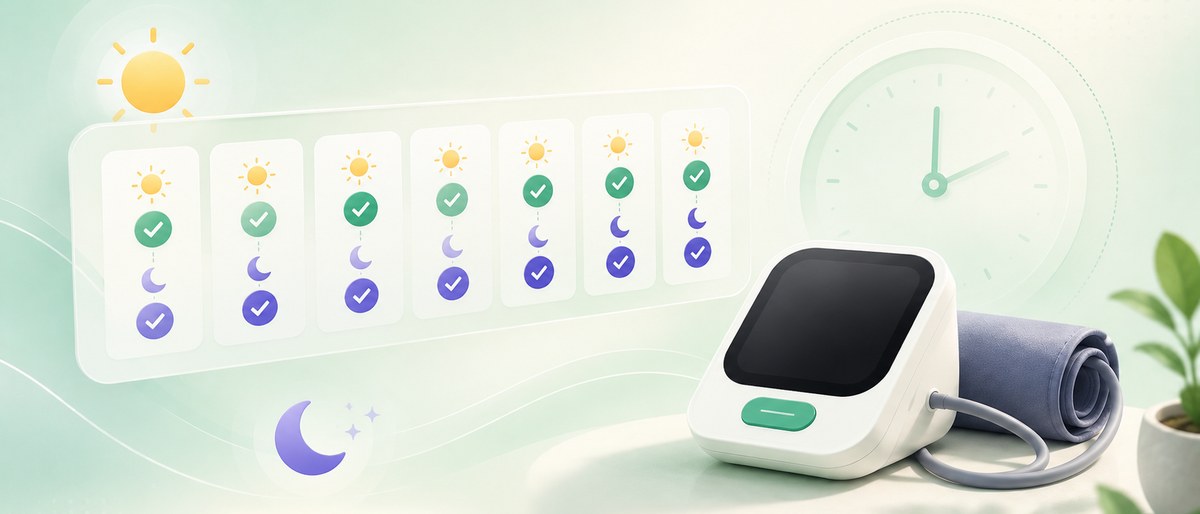
The layout clinicians rely on follows the American Heart Association's home-monitoring guidance, sometimes called the 722 protocol: two readings one minute apart, twice a day (morning and evening), for seven consecutive days. That works out to 28 readings, and because first-day numbers tend to run high, the AHA/AMA policy statement notes that some guidelines discard day one and average the rest. A useful log therefore captures four things per row: when the reading was taken, which arm, the systolic and diastolic values, and an optional note for anything unusual. The figure your doctor reads first is the average across those days, with the range shown beside it.
What a doctor-ready log actually needs
Blank template galleries hand you a grid without saying why each column exists. Here is what earns a place, and what a clinician does with it.
| Field | Why it earns a column |
|---|---|
| Date | Groups readings into the multi-day window your doctor averages. |
| Time of day | Morning and evening numbers differ; timing lets patterns show. |
| Arm used | Left and right can differ by 10 mmHg or more; keep it consistent. |
| Systolic / diastolic | The two core numbers, written as top/bottom (e.g. 128/82). |
| Reading 1 and Reading 2 | Two per sitting, a minute apart, so a single odd value stands out. |
| Pulse (optional) | Most monitors show it; it adds context at no extra effort. |
| Note | A missed dose, poor sleep, or a stressful morning explains an outlier. |
You don't need every field to make a log useful, but the first four are the ones a clinician will ask about. If you can only track a few things, track those.
Why the extra columns matter more than they look
The arm column is the quiet workhorse. A difference of more than 10 mmHg between arms can itself be meaningful, so mixing arms in one log muddies the average. Pick one arm, usually the one that reads higher, and stay with it.
The note column is where a log beats a bare number. A reading of 148/94 looks worrying on its own. The same reading with "ran up two flights of stairs, no rest" beside it reads very differently. You are not diagnosing anything by writing that note. You are handing your doctor the context that turns a scary figure into a readable one.
The 722 protocol: how many readings to bring
The single most common mistake is bringing one or two readings taken the morning of the appointment. Those numbers carry almost no weight, because blood pressure swings hour to hour. What your clinician wants is a stable average, and that takes a short run of days.
- Preferred: 7 consecutive days, morning and evening, 2 readings each time (28 total).
- Minimum: 3 days on the same schedule (12 readings).
- Discard day one if you can, since first-day readings tend to run high, then average the rest.
Space the two readings in each sitting about a minute apart, and sit quietly for five minutes first. Our guide on how to take an accurate reading at home covers the setup that keeps every entry comparable.
Turn the numbers into something a doctor can read
A log is raw material, not the finished answer. Handing over 28 loose numbers asks your doctor to do arithmetic in the exam room. Do the small step yourself: report the average systolic and diastolic across the week, and the range (lowest to highest). "Averaging about 132/84 over seven days, ranging from 118/76 to 145/92" is a sentence a clinician can act on.
Keep the raw readings too, because the pattern matters. If mornings sit higher than evenings, or one day spikes, that shape is worth seeing. This is exactly why logging beats memory, a point we cover in why logging your blood pressure helps. Bring the full sheet, not just the summary, and let the numbers speak for themselves.
Paper template vs a digital log
A printed grid on the fridge works, and for some people the ritual of writing it down is the thing that makes the habit stick. The honest trade-offs:
- Paper is free and needs no setup, but you calculate the average by hand, it is easy to skip a day, and a lost sheet loses everything.
- A digital log timestamps entries automatically, works out the average and range for you, and produces a clean export, though it does mean keeping your phone handy at reading time.
Neither is wrong. Pick the one you will actually keep for seven days straight, because a consistent paper log beats a digital one you abandon.
Logging without the paperwork
If a digital log fits your routine, this is where BPlus does the tedious part. You enter each systolic and diastolic value, and the time, date and arm are stamped automatically, so the columns that matter fill themselves. You can add a note to any reading for the context a doctor looks for, or scan the display of your own monitor with the camera so the numbers go in without typing.
When the appointment comes, a doctor-ready PDF or CSV export hands over the full history in the format described above, average and range included, without you copying anything by hand. BPlus keeps your data on the device, works offline, and needs no account. It is a wellness and logging tool: it does not measure your blood pressure or interpret your log, and it is not a substitute for professional care. What it does well is make the seven-day habit painless enough that you finish it. If you are unsure how many days to record between visits, how often to check your blood pressure at home walks through the cadence.
Mini-FAQ
How many days of readings should I bring to a doctor visit? Seven consecutive days is the target, with a minimum of three, taking two readings each morning and evening. That gives a stable average rather than a single number that may have caught you on an unusual day.
Should I write down every reading or just the average? Both. Bring the full log so your doctor can see the pattern, and calculate the average and range yourself so the headline is easy to read. The raw entries reveal timing effects the average alone would hide.
What if I get a very high reading while logging? Log it and keep going for a routine reading. But a reading above 180/120 mmHg, especially with chest pain, shortness of breath, weakness or vision changes, is the hypertensive crisis range: seek medical help immediately rather than waiting to record another entry.
Do I need to log my pulse and notes? They are optional but useful. Pulse comes free on most monitors, and a one-line note explaining an outlier (a missed dose, a rough night) saves your doctor from guessing why a number looks off.
Sources
- American Heart Association: Monitoring Your Blood Pressure at Home
- Self-Measured Blood Pressure Monitoring at Home: AHA/AMA Joint Policy Statement, Circulation
- Measurement of Blood Pressure in Humans: AHA Scientific Statement, Hypertension
- Centers for Disease Control and Prevention: Measure Your Blood Pressure
Keep your readings in one calm place
BPlus does the logging with you: record by hand or scan your monitor, watch your trends, and export a doctor-ready report when you need one.
Medical disclaimer. BPlus is a wellness and informational tool that helps you record, organize and understand your blood pressure readings. It is not a medical device and does not diagnose, treat, cure or prevent any disease. BPlus does not measure blood pressure on its own. Always consult a qualified healthcare professional. Readings are not a substitute for a clinically validated blood pressure monitor.