Best Position to Take Blood Pressure: Sitting or Lying Down?
For an accurate reading, sit with your back supported and your arm at heart level. Here is how sitting, lying down and arm height each shift your numbers.
This article is educational content, not medical advice. Always talk to a healthcare professional about your blood pressure.
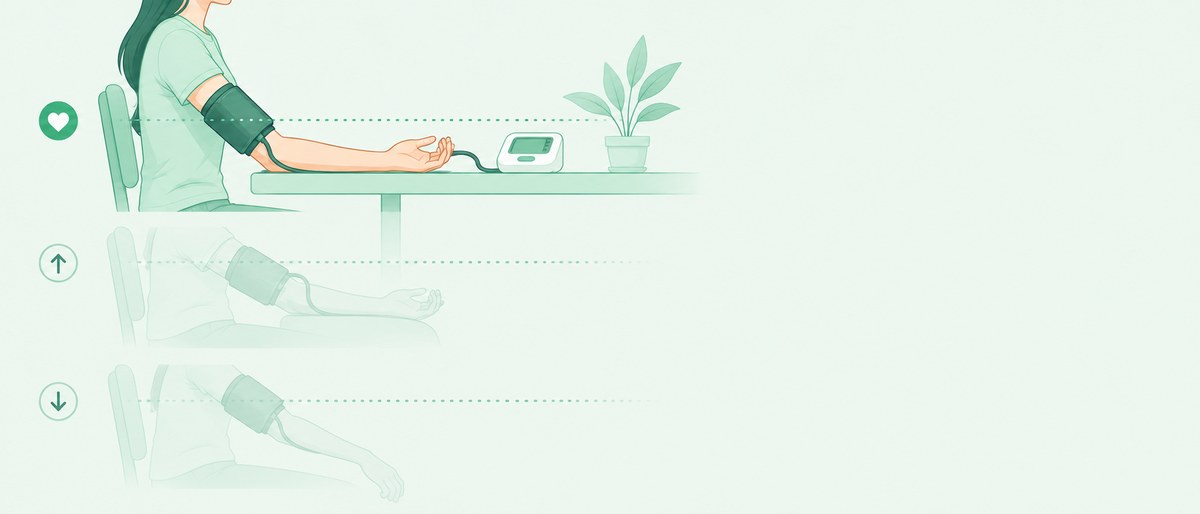
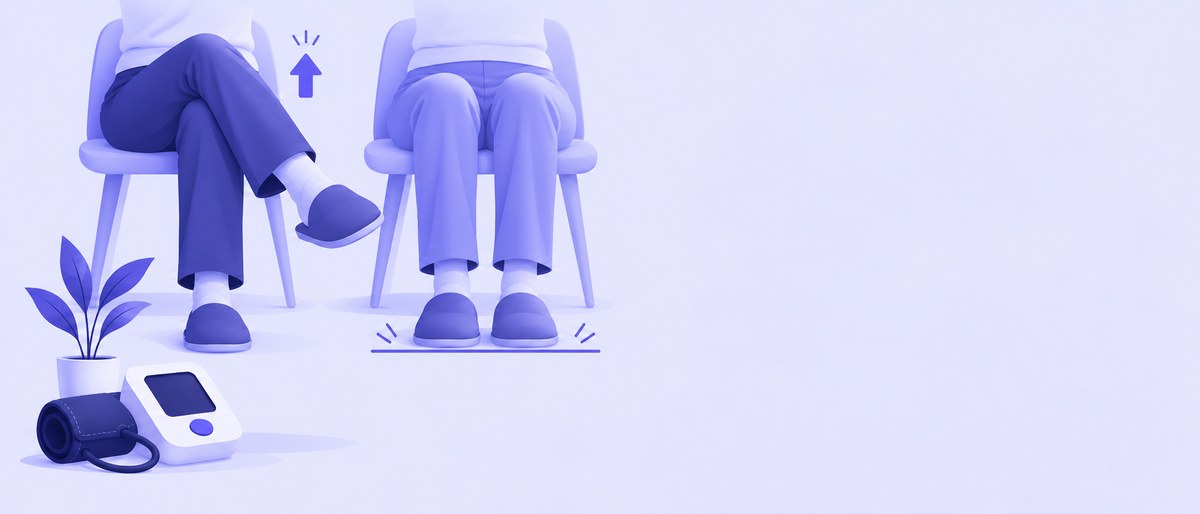
For a standard blood pressure reading, sit down: back supported, feet flat, legs uncrossed, and the arm resting at heart level. That seated posture is what home and clinic guidelines are built around, and getting the arm height right matters more than most people expect. Lying down usually gives a slightly lower number, so it isn't a drop-in replacement for a seated reading.
The reference position, and why arm height matters most
The American Heart Association's scientific statement on measuring blood pressure sets the reference posture: seated quietly for at least five minutes, back and feet supported, legs uncrossed, and the middle of the cuff level with your heart. Stray from it and the number climbs in fairly predictable amounts. A 2024 Johns Hopkins study in JAMA Internal Medicine found that resting the arm in your lap added about 3.9 mmHg to the top number, and letting it hang at your side added 6.5 mmHg, compared with an arm supported at heart level. Sitting with an unsupported back adds several more. Lying down, by contrast, usually reads lower than sitting, so the two positions are not interchangeable.
Most people treat "sitting up" as the whole instruction and then rest the cuffed arm on their thigh or let it dangle. That single detail, the arm below heart level, is the largest avoidable error in home monitoring. When the arm sits below heart level, gravity adds pressure the cuff reads as your own.
How much each position error changes the number
Small posture slips are additive, so two or three at once can turn a normal reading into a scary one. The lap and side figures below come from the Johns Hopkins trial; the arm-height, back and leg effects are the estimates in the AHA scientific statement.
| Position or posture | Typical effect on the top number |
|---|---|
| Arm resting in your lap instead of at heart level | +3.9 mmHg |
| Arm hanging unsupported at your side | +6.5 mmHg |
| Arm below heart level, per 10 cm (4 in) of drop | about +10 mmHg |
| Sitting with your back unsupported | +6 mmHg |
| Legs crossed at the knee | +2 to +8 mmHg |
None of these mean anything is wrong with you or the monitor. They mean the reading captured your setup along with your blood pressure. The fix is the reference posture: sit in a chair with back support, keep both feet flat, and rest the cuffed arm on a table or armrest so the cuff lands level with your heart, roughly at mid-chest. That is the same setup the CDC describes for a reliable reading, and our guide on how to take an accurate reading at home walks through the full checklist.
What lying down actually does to the reading
A supine reading is not "more accurate," it is a different measurement. Blood pressure taken lying flat is usually a little lower than the same person's seated number, because posture changes how blood distributes and how hard the heart works against gravity. So if you take one reading in bed and another in a chair, expect them to disagree, and don't read that gap as an error or a sudden change.
There is genuine research interest in supine numbers. Studies presented through the American Heart Association suggest that high blood pressure measured while lying down can flag cardiovascular risk that a seated reading misses. That is a finding for clinicians to act on, not a reason to switch your home routine to bed. For tracking your own trend, the practical rule is simpler: pick one position, usually seated, and stay with it, so you're comparing like with like. Our piece on why readings differ each time covers how much normal variation to expect.
Where standing fits in
Standing is not the home default, but it has a specific use. Blood pressure can dip in the first three minutes after you stand, and a large drop can leave you lightheaded. This is orthostatic hypotension, and it's something a clinician may check on purpose by measuring you seated and then standing. Unless you've been asked to track standing readings, take your routine measurements seated and save standing checks for a visit.
The setup that keeps readings comparable
The point of a fixed position is comparability. A week of readings only means something if each one was taken the same way, so the differences reflect your body and not your chair. Sit quietly for five minutes first, keep your back supported and feet flat, uncross your legs, rest the cuffed arm so the cuff is at heart level, put the cuff on bare skin, and stay silent during the reading. Then measure at the same times each day, following the Mayo Clinic advice to keep your numbers comparable over time.
One safety note that overrides all of this: a single reading at or above 180/120 mmHg, especially alongside chest pain, shortness of breath, weakness or trouble speaking, is the hypertensive crisis range. Retake it once, and if it holds, seek medical help immediately rather than fussing over posture.
Logging readings from the same position
Because position changes the number, the reliable figure is a set of readings taken the same way and averaged, not a single measurement. Take two or three readings a minute apart, in the same seated position, at the same times each day, and follow the average across the week.
This is where BPlus helps. You log each systolic and diastolic value, or scan your monitor's display with the camera so the numbers go in without typing, and the time, date and arm are stamped automatically. You can add a note to any entry, like "measured lying down" or "arm on lap," so an off-looking reading explains itself later instead of becoming a worry. BPlus then charts your trend and average over time. It keeps your data on the device, works offline and needs no account. It is a wellness and logging tool: it doesn't measure or interpret your blood pressure, and it isn't a substitute for professional care. What it does is turn same-position readings into a pattern you and your doctor can actually read.
Mini-FAQ
Is it better to take blood pressure sitting or lying down? Sitting is the standard for a routine reading, with your back supported and the cuffed arm at heart level. Lying down usually gives a lower number and is used mainly in specific clinical situations, so it isn't a substitute for your everyday seated measurement.
Does lying down give a higher or lower blood pressure reading? Usually lower. A supine reading tends to run a bit below the same person's seated number because posture changes how blood is distributed. That's why you shouldn't compare a reading taken in bed with one taken in a chair and treat the gap as a real change.
Why does my arm position change the reading so much? When the cuffed arm sits below heart level, gravity adds pressure that the monitor counts as yours. A Johns Hopkins study found an arm hanging at the side overstated the top number by 6.5 mmHg. Supporting the arm at mid-chest height removes that error.
Which arm and position should I use each time? Use the same arm and the same seated position every time so your readings stay comparable. If your two arms differ by more than 10 mmHg on the same visit, mention it to a clinician and use the higher-reading arm for future checks.
Sources
- Measurement of Blood Pressure in Humans: AHA Scientific Statement, Hypertension
- Johns Hopkins Medicine: Commonly Used Arm Positions Can Overestimate Blood Pressure Readings (JAMA Internal Medicine, 2024)
- Mayo Clinic: Get the Most Out of Home Blood Pressure Monitoring
- Centers for Disease Control and Prevention: Measure Your Blood Pressure
Keep your readings in one calm place
BPlus does the logging with you: record by hand or scan your monitor, watch your trends, and export a doctor-ready report when you need one.
Medical disclaimer. BPlus is a wellness and informational tool that helps you record, organize and understand your blood pressure readings. It is not a medical device and does not diagnose, treat, cure or prevent any disease. BPlus does not measure blood pressure on its own. Always consult a qualified healthcare professional. Readings are not a substitute for a clinically validated blood pressure monitor.