Why Does Talking Raise Your Blood Pressure Reading?
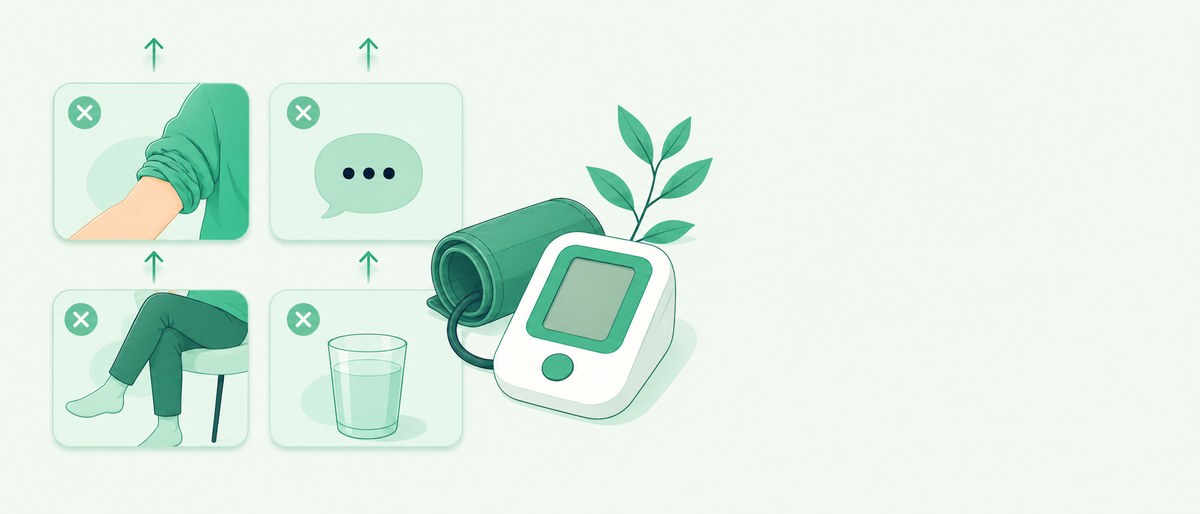
Talking during a measurement can push your systolic reading up by around 10 mmHg, and even silently listening does it, so stay quiet while you measure.
This article is educational content, not medical advice. Always talk to a healthcare professional about your blood pressure.
Yes, talking raises your blood pressure reading, and it happens fast. Speaking during a measurement can lift your systolic number by around 10 mmHg, enough to move a normal reading into the elevated range. The surprising part is that you don't even have to be the one talking. Listening attentively to someone else while the cuff inflates nudges the number up too. The fix is simple: stay silent from the moment you sit down to rest until the cuff fully deflates.
The reason is mental engagement, not the physical act of speaking. When you talk or actively listen, your brain switches on, and that activation triggers the sympathetic nervous system, the same "fight or flight" branch that raises pressure under stress. The American Heart Association's measurement guidelines list talking as one of the common errors that add roughly 10 mmHg to a reading, and they instruct both patient and observer to stay quiet during the measurement. The effect shows up within the first minute of speech and settles again once you fall silent. It doesn't require a stressful topic either. Even neutral small talk or reading aloud is enough to move the number, because it's the cognitive effort, not the emotion, that drives the rise.
How much does talking change the reading?
The rise is temporary but large enough to matter when you're tracking numbers at home. The table below puts talking next to other everyday factors that skew a measurement, so you can see how it ranks. The figures come from the American Heart Association's measurement guidance.
| Factor during measurement | Typical effect on systolic |
|---|---|
| Talking or active listening | +10 mmHg |
| Full bladder | +10 to 15 mmHg |
| Unsupported back or feet | +6 to 10 mmHg |
| Arm below heart level | +8 mmHg or more |
| Crossed legs | +2 to 8 mmHg |
Talking sits right at the top of that list, on par with a full bladder, and it's one of the easiest to control. Combine it with a couple of the others, such as answering a question from a nurse while your arm dangles below your heart, and a single reading can land a full category higher than your true resting pressure.
Why does talking push the number up?
Speech is a whole-body task. Your brain plans the words, your breathing changes to support your voice, and your attention shifts outward to the person you're addressing. All of that raises your level of arousal, and the sympathetic nervous system responds by tightening blood vessels and speeding the heart, which lifts pressure. Researchers have measured this directly: blood pressure climbs within seconds of someone beginning to speak and stays up as long as the conversation continues.
What matters for your home readings is that the content is almost irrelevant. You might assume only an argument or bad news would move the number, but studies show that reading a passage aloud or chatting about the weather produces a similar rise. The trigger is engagement itself. That's why the guidance isn't "avoid stressful conversation" but simply "don't talk," full stop.
Does listening count too?
It does, and this is the part most people miss. Actively listening, meaning you're paying real attention and mentally preparing to respond, raises blood pressure much like talking does. So a measurement taken while a nurse explains your results, or while your partner asks how your day went, is compromised even if your own mouth stays shut. The AHA statement is explicit that both the person being measured and anyone else in the room should stay quiet.
Passive background sound is different. Soft music or distant traffic doesn't demand your attention the way a direct conversation does, so it has little effect. The line to watch is engagement: anything that pulls you into a mental exchange, including a phone call, a text you're composing in your head, or a question you feel obliged to answer, works against an accurate reading.
How to keep talking from skewing your numbers
Build a short pocket of quiet around each measurement. Sit down, put your phone on silent and face down, and rest for five minutes without speaking or checking messages. Keep that silence going right through the reading until the cuff has fully released. If you measure at home with family nearby, tell them you'll be quiet for a few minutes and ask them to hold their questions.
At a clinic, you have the same right to silence. If a nurse starts a conversation while the cuff is inflating, it's fine to gesture that you'll answer once it's done. A reading taken mid-sentence isn't your real pressure, and a good clinician will understand. For the full pre-reading setup, our checklist for an accurate reading at home covers the other rules, and the guide to common mistakes that raise your reading shows how these small factors stack up.
Keeping the conditions consistent is where a log pays off, and that's what BPlus is built for. You enter each systolic, diastolic and pulse reading by hand, or scan your monitor's display with the camera so the numbers go in without typing, and the time and date are stamped automatically. Add a quick note like "stayed silent" or "took a call mid-reading" to any entry, then let the app chart your trend and sort each reading into the standard categories. Over a couple of weeks you can see whether your numbers settle once silence becomes part of the routine. BPlus keeps everything on your device, works offline and needs no account. It's a wellness and logging tool, not a medical device: it doesn't measure, diagnose or treat blood pressure, and it's no substitute for professional care. What it does is make a controllable variable like this easy to spot and fix.
Mini-FAQ
Does talking raise blood pressure or just the reading? Both, but the rise is temporary. Speaking genuinely lifts your pressure for as long as the conversation lasts, then it settles once you stop. For a home measurement, that means a reading taken while talking reflects the talking, not your true resting pressure, so keep quiet to capture your real baseline.
How long should I stay quiet before measuring? Stay silent for the full five minutes of rest before the reading and right through the measurement itself. The rise from talking fades within a minute or two of falling silent, so a few quiet minutes beforehand lets your pressure return to baseline before the cuff inflates.
Can talking cause a false high blood pressure diagnosis? It can contribute. Talking is one of the common measurement errors that inflate readings and can push someone into a higher category on paper. That's one reason a diagnosis relies on multiple readings across several visits rather than a single number. If a reading above 180/120 mmHg does not come down with quiet rest, seek medical help immediately.
Does listening to music affect my reading? Passive background music has little effect because it doesn't demand your attention. The problem is active mental engagement, such as a conversation or a phone call. Quiet instrumental music while you rest is fine and may even help you relax before measuring.
Sources
Keep your readings in one calm place
BPlus does the logging with you: record by hand or scan your monitor, watch your trends, and export a doctor-ready report when you need one.
Medical disclaimer. BPlus is a wellness and informational tool that helps you record, organize and understand your blood pressure readings. It is not a medical device and does not diagnose, treat, cure or prevent any disease. BPlus does not measure blood pressure on its own. Always consult a qualified healthcare professional. Readings are not a substitute for a clinically validated blood pressure monitor.