Does Crossing Your Legs Raise Your Blood Pressure Reading?
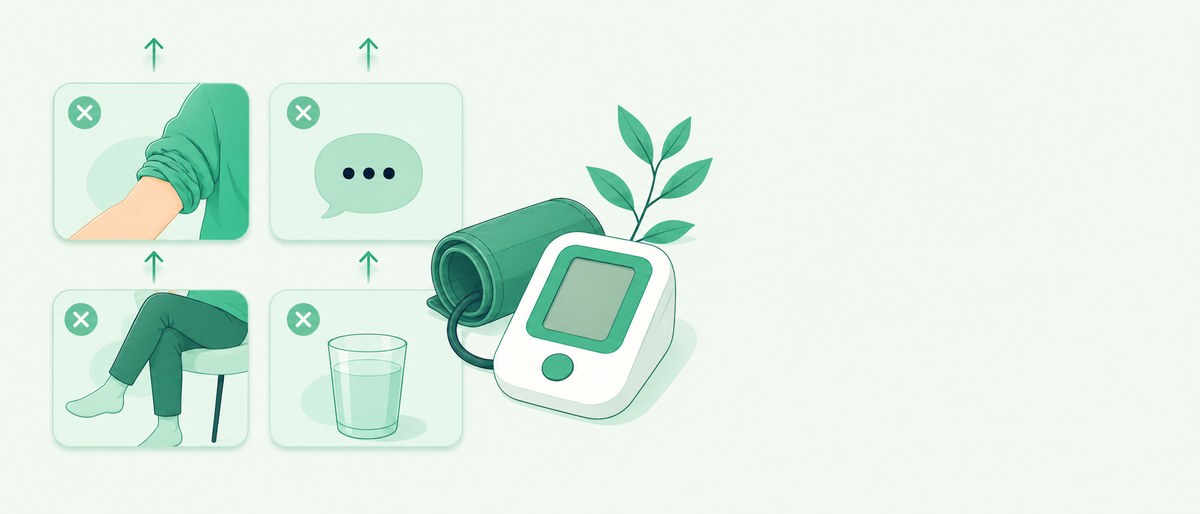
Yes. Crossing your legs at the knee during a reading can add a few points, and more if you have high blood pressure. Keep both feet flat on the floor.
This article is educational content, not medical advice. Always talk to a healthcare professional about your blood pressure.
Yes, crossing your legs at the knee while a reading is taken can push the number up, usually by a few points in most people and by more in those being treated for high blood pressure. Crossing at the ankle does not seem to have the same effect. The fix is simple: sit with both feet flat on the floor before you press start.
The size of the change depends on who you are. In studies of healthy adults, crossing the legs at the knee lifted systolic pressure by roughly 2 to 3 mmHg, small enough to ignore. In people being treated for hypertension the effect was larger, on the order of 8 to 10 mmHg systolic and a few points of diastolic in a randomized crossover study. Both the American Heart Association and the CDC list uncrossed legs and flat feet among the basic rules for an accurate reading, alongside a supported back and an arm at heart level. So this is not a fringe worry. It is one of the everyday posture mistakes that quietly inflates home numbers.
Why does crossing your legs push the number up?
It is mechanical, not mysterious. When you cross one leg over the other at the knee, you compress the blood vessels in the thigh and hold the leg muscles in a light, sustained contraction. That combination raises the resistance the heart has to push against, so the pressure the cuff records climbs.
The AHA explains that crossing the legs at the knees reduces the blood returning to the heart, forcing the body to work harder to keep it moving. It is the same reason a lack of back or leg support can nudge a reading up by around 5 mmHg. None of this reflects your true resting pressure. It is posture leaking into the measurement.
How many points does crossing your legs actually add?
Enough to matter if your readings sit near a category line, and enough to explain a puzzling high number. The effect is not the same for everyone, which is why the studies report a range rather than a single figure.
| Who | What changed | Typical systolic effect | Source |
|---|---|---|---|
| Healthy adults | Legs crossed at the knee | About 2 to 3 mmHg higher | Crossover studies |
| Treated hypertension | Legs crossed at the knee | About 8 to 10 mmHg higher | Randomized crossover study |
| Anyone | Crossed at the ankle only | No meaningful change | Crossover studies |
| Anyone | Feet unsupported, dangling | Can read higher | AHA / CDC |
The pattern is consistent: the higher your blood pressure already runs, the more crossing your legs seems to add. That makes it exactly the wrong habit for the people who most need a clean number.
Knee versus ankle: only one matters
Here is the detail most quick answers skip. The research points specifically to crossing at the knee, where one thigh presses on the other. Resting your ankles together or one ankle loosely over the other did not move blood pressure much in the same studies. So if you naturally rest your feet with the ankles touching, you are not the target of this rule. The instruction that matters is narrower than "don't cross your legs" in general. It is: keep your thighs uncrossed and your feet flat, so nothing is compressing the vessels in your legs while the cuff inflates.
Is the effect real or does it just linger?
It is a live, posture-driven effect, not a lasting change to your pressure, which is good news. Because the number rises from the crossed position itself, uncrossing your legs and sitting properly removes it. There is no hangover to wait out the way there is with caffeine or a rushed walk to the chair. If you took a reading with your legs crossed and it looked high, you do not have to worry about it or wait an hour. Sit with both feet flat, rest quietly for a few minutes, and take it again. This is one of several everyday factors covered in our guide to mistakes that raise your blood pressure reading, most of which correct themselves the moment you fix the setup.
When a high reading isn't about your legs
Posture explains a few points, not a crisis. If a reading comes in above 180/120 mmHg and does not settle after a few minutes of rest and a repeat with correct posture, or you have symptoms like chest pain, shortness of breath, or trouble speaking, seek medical help immediately. Crossed legs can shade a borderline reading in the wrong direction, but they do not create a genuinely dangerous number. Never talk yourself out of acting on a crisis-level reading by blaming your posture.
How to sit for an honest reading
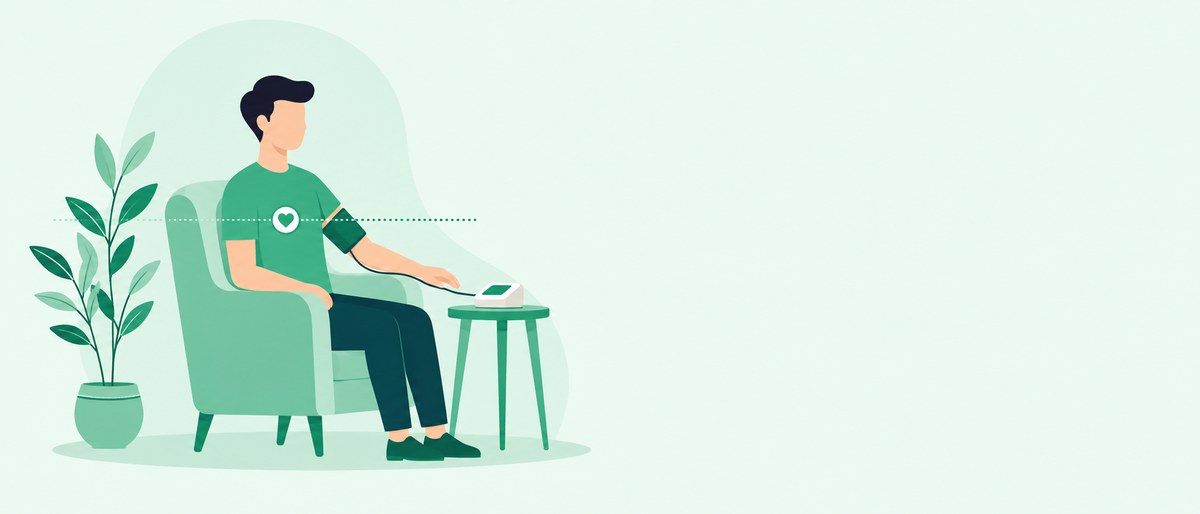
Fixing this costs nothing and takes no extra time. The AHA and CDC describe the same simple setup, and it is worth getting into muscle memory.
- Sit in a chair that supports your back, not on a stool or the edge of a bed.
- Put both feet flat on the floor and keep your legs uncrossed.
- Rest your bare upper arm on a table so the cuff sits at heart level.
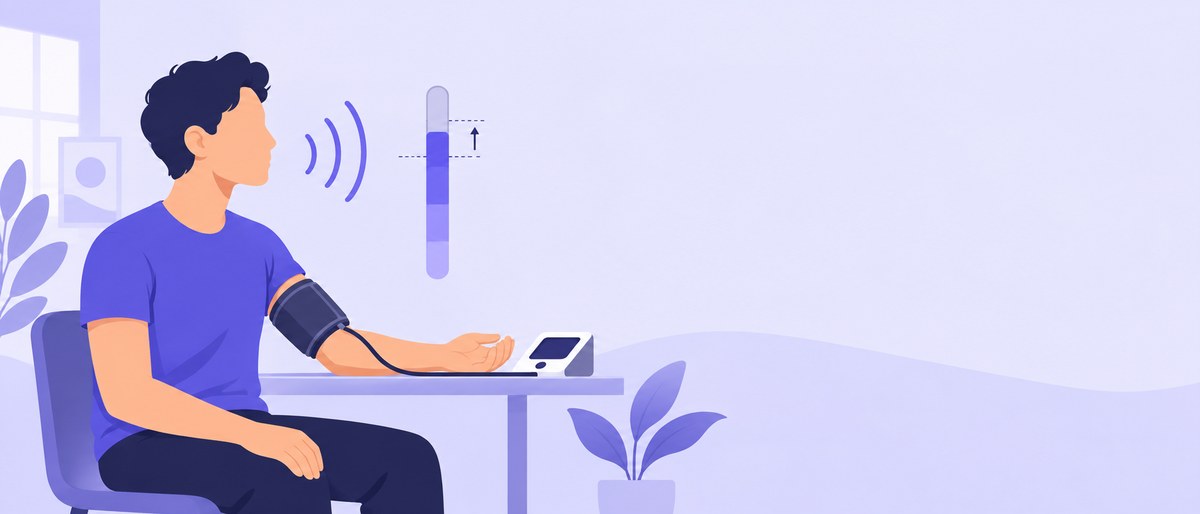
- Sit quietly for about five minutes first, and don't talk during the reading.
- Take two readings at least a minute apart and record both.
Getting the posture right is only half the job. The other half is noticing when a number was off because of how you sat, and that is where a log earns its keep. Our explainer on how to position your arm covers the other posture rule people get wrong most often, and the best sitting or lying position guide puts the whole setup together.
Turning a stray high number into something you can actually explain is what BPlus is built for. You enter each systolic, diastolic and pulse reading by hand, or scan your monitor's display with the camera so the numbers go in without typing, and the time and date are stamped automatically. Add a quick note like "legs crossed, retook it" to any entry, then let the app chart your trend and sort each reading into the standard categories. Over a few weeks you can see whether a posture slip was a one-off or a pattern worth fixing. BPlus keeps everything on your device, works offline and needs no account. It is a wellness and logging tool, not a medical device: it does not measure, diagnose or treat blood pressure, and it is no substitute for professional care. What it does is help you tell a posture artifact from a real trend.
Mini-FAQ
Does crossing your legs at the ankle raise blood pressure too? Not meaningfully. The studies that found a rise looked at crossing one leg over the other at the knee, where the thighs press together. Resting your ankles loosely did not move the number much. The rule that matters is keeping your thighs uncrossed and your feet flat on the floor.
How much can crossing your legs change a reading? In healthy adults it is small, around 2 to 3 mmHg systolic. In people being treated for high blood pressure a randomized study found a larger jump, roughly 8 to 10 mmHg systolic. So the habit adds the most to the readings of the people who can least afford an inflated number.
Should I retake a reading if my legs were crossed? Yes. Because the effect comes from the position itself, uncrossing your legs removes it right away. Sit with both feet flat, rest quietly for a few minutes, and measure again. Keep the corrected reading and note that the first one was taken with crossed legs.
Why do the rules say feet flat on the floor? Uncrossed legs and flat, supported feet keep the vessels in your legs from being compressed and stop your leg muscles from tensing, both of which can raise the reading. The AHA and CDC group this with a supported back and an arm at heart level as the basics of an accurate measurement.
Sources
- American Heart Association: The rules for measuring blood pressure and why they exist
- CDC: Measuring Your Blood Pressure
- American Heart Association: Measurement of Blood Pressure in Humans (Scientific Statement)
- The effect of crossing legs on blood pressure: a randomized single-blind cross-over study
Keep your readings in one calm place
BPlus does the logging with you: record by hand or scan your monitor, watch your trends, and export a doctor-ready report when you need one.
Medical disclaimer. BPlus is a wellness and informational tool that helps you record, organize and understand your blood pressure readings. It is not a medical device and does not diagnose, treat, cure or prevent any disease. BPlus does not measure blood pressure on its own. Always consult a qualified healthcare professional. Readings are not a substitute for a clinically validated blood pressure monitor.