Does Drinking Water Affect Your Blood Pressure Reading?
A large glass of water can nudge a reading up for a few minutes, mostly in older adults. Here is how hydration changes the number and when to measure.
This article is educational content, not medical advice. Always talk to a healthcare professional about your blood pressure.
A big glass of plain water can push a blood pressure reading up by a few mmHg for roughly half an hour, and the effect is much stronger in older adults than in younger ones. Small sips barely register. Over the long run, staying well hydrated supports normal blood pressure, while dehydration can move the number in either direction. So water matters mostly as a timing detail: don't gulp a large glass right before you measure.
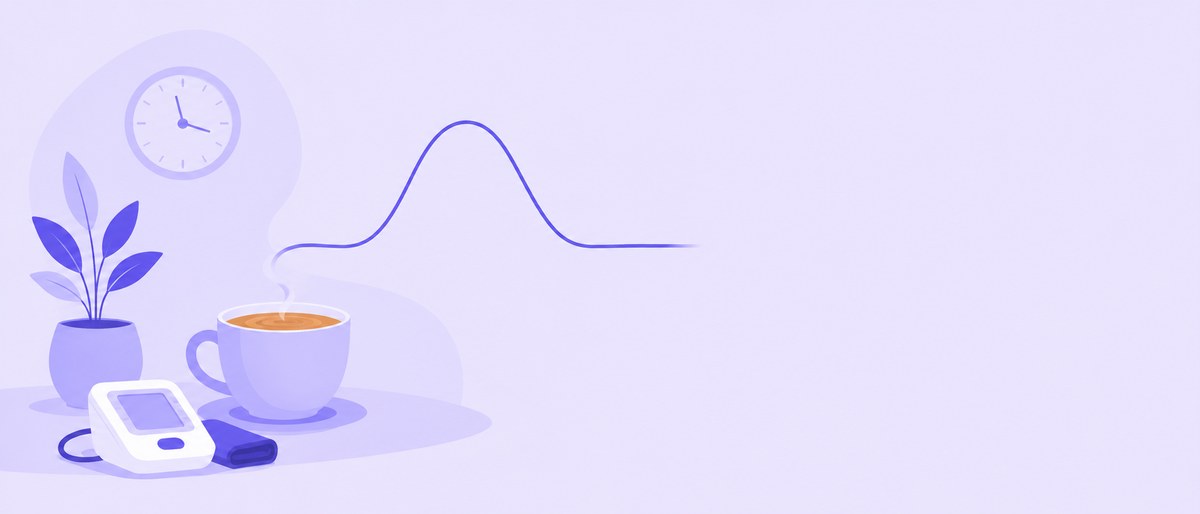
The clearest evidence comes from a classic American Heart Association study in Circulation, which found that drinking about 480 mL (roughly 16 oz) of plain water raised systolic pressure by as much as 11 mmHg in older healthy adults, with little measurable change in younger controls. This pressor response starts within about 5 minutes, peaks near 30 to 35 minutes, and settles back toward baseline inside an hour. Researchers trace it to a fast rise in sympathetic nervous system activity rather than to the fluid volume itself. The practical point is narrow: a large drink can briefly inflate a reading, so the timing of your glass matters more than whether you drink at all.
Does a glass of water raise or lower your blood pressure?
Right after you drink, it tends to go up, not down. The rise is small in most people and easy to miss, but in older adults it can be big enough to bump an otherwise normal reading into a higher band if you measure at the wrong moment. The response follows a predictable curve tied to when the water hits your system.
| Time after a large glass of water | What happens to blood pressure |
|---|---|
| Within about 5 minutes | The rise begins |
| About 30 to 35 minutes | Peak effect, up to roughly 11 mmHg systolic in older adults |
| Within about 60 minutes | Drifts back toward baseline |
Because the peak sits around half an hour out, the riskiest time to measure is soon after downing a full glass. The fix is the same one that solves most measurement quirks: sit quietly for a few minutes first, and skip the big drink in the run-up to a reading.
Why older adults feel it more
The water pressor response is a nervous system reflex, not a volume effect, which is why the amount you drink matters less than how your body reacts to it. In the Circulation study, the same 480 mL that moved systolic pressure by around 11 mmHg in older participants produced no detectable change in younger controls. As we age, the reflexes that keep blood pressure steady behave differently, and drinking water triggers a sharper sympathetic surge. If you are over 60 and tracking your numbers, this is worth knowing, because it means a glass of water can be a hidden variable that a younger person would never notice.
Does dehydration raise or lower blood pressure?
This is where a lot of online advice goes wrong by picking one answer. Dehydration can do both. As Cleveland Clinic explains, losing fluid shrinks your blood volume, and less volume in the pipes tends to lower blood pressure. At the same time, dehydration prompts your body to release vasopressin, a hormone that tightens blood vessels to conserve water, and that narrowing can push pressure back up. Which effect wins depends on how dehydrated you are and on your own physiology, so the honest answer is that dehydration destabilizes blood pressure rather than reliably raising or lowering it. Either way, showing up to a reading noticeably thirsty is not ideal.
How much water should you drink for healthy blood pressure?
Enough to stay comfortably hydrated, which is a general-wellness goal rather than a blood pressure treatment. Mayo Clinic puts adequate daily fluid at roughly 15.5 cups for men and 11.5 cups for women, counting everything you drink and the water in food, not just plain glasses of water. Spreading that intake across the day supports steady blood pressure far better than drinking nothing and then a large glass all at once, which is exactly the pattern that produces the pressor spike.
One number is worth keeping separate from all of this. A genuine reading above 180/120 mmHg is never explained by a glass of water. If a reading that high does not come down after a few minutes of rest and a repeat measurement, or you have symptoms like chest pain, shortness of breath or trouble speaking, seek medical help immediately.
When to drink and when to measure
You don't need to stop drinking water, you just need to separate the big glass from the cuff. The standard measurement conditions from the AHA scientific statement already build in the buffer that helps: sit with your back supported and feet flat, rest quietly for 5 minutes, keep an empty bladder, and avoid caffeine beforehand. Add one line to that list and you have covered water too.
- Skip a large drink of water in the roughly 30 minutes before measuring.
- Small sips to wet your mouth are fine and not worth worrying about.
- Stay hydrated across the whole day rather than catching up all at once.
If you want to see how much of your day-to-day variation comes from small habits like this, our guide to why your readings differ each time covers the other everyday factors, and the checklist for an accurate reading at home walks through the full pre-measurement routine so water is only one of the variables you are controlling.
Sorting out which habit moves your own number is where careful logging earns its keep, and it is what BPlus is built for. You enter each systolic, diastolic and pulse reading by hand, or scan your monitor's display with the camera so the numbers go in without typing, and the time and date are stamped for you automatically. Add a short note like "after a big glass of water" to any reading, then let the app chart your trend and sort each entry into the standard categories. Over a week or two you can see for yourself whether a large drink really does line up with a higher number, especially if you are older. BPlus keeps everything on your device, works offline and needs no account. It is a wellness and logging tool, not a medical device: it does not measure, diagnose or treat blood pressure, and it is no substitute for professional care. What it does is turn a vague worry into something you can actually check.
Mini-FAQ
Should I drink water before a blood pressure test? You don't need to load up on water, and a large glass right beforehand can briefly raise the number, most noticeably in older adults. Being normally hydrated is fine. Just avoid gulping a big drink in the 30 minutes before you measure, and give yourself the usual 5 minutes of quiet rest first.
Can drinking water lower high blood pressure quickly? No. Water is not a fast fix for a high reading, and in the short term a large glass tends to nudge pressure up rather than down. Good daily hydration supports healthy blood pressure over time, but it is not a treatment, and a persistently high reading is a reason to talk to a clinician.
Does the temperature of the water matter? Both cold and room-temperature water can trigger the pressor response, so the effect is not limited to one or the other. Rather than track temperature, keep the simpler rule: leave any large drink, warm or cold, out of the half hour before you measure.
Why did my reading go up after drinking water? Most likely the normal pressor response, a brief sympathetic-driven rise that peaks around 30 minutes after a big glass and fades within an hour. It is more pronounced with age. Rest quietly and re-measure a bit later, and the number should ease back toward your baseline.
Sources
Keep your readings in one calm place
BPlus does the logging with you: record by hand or scan your monitor, watch your trends, and export a doctor-ready report when you need one.
Medical disclaimer. BPlus is a wellness and informational tool that helps you record, organize and understand your blood pressure readings. It is not a medical device and does not diagnose, treat, cure or prevent any disease. BPlus does not measure blood pressure on its own. Always consult a qualified healthcare professional. Readings are not a substitute for a clinically validated blood pressure monitor.