Does a Full Bladder Raise Your Blood Pressure Reading?
Yes. A full bladder can push a systolic reading up by roughly 10 to 15 mmHg through a nerve reflex, so empty your bladder before you measure.
This article is educational content, not medical advice. Always talk to a healthcare professional about your blood pressure.
Yes, a full bladder can raise your blood pressure reading, and the effect is bigger than most people expect. Holding urine can lift your systolic number by roughly 10 to 15 mmHg while the bladder is full, then let it settle again once you empty it. That's enough to turn a normal reading into an elevated one, so a quick bathroom trip before you measure is one of the easiest ways to keep your numbers honest.
The reason is a nerve reflex, not just physical pressure. A stretched bladder activates the sympathetic nervous system, the same "fight or flight" branch that drives your pressure up under stress. In a classic study measuring nerve traffic directly, bladder distension raised blood pressure from an average of 125/74 to 140/84 mmHg, a jump of about 15 points systolic and 10 diastolic, alongside a clear rise in sympathetic nerve activity. After the participants emptied their bladders, both the nerve traffic and the pressure drifted back toward where they started. This is why the American Heart Association lists an empty bladder as one of its core rules for an accurate measurement.
How much does a full bladder change the number?
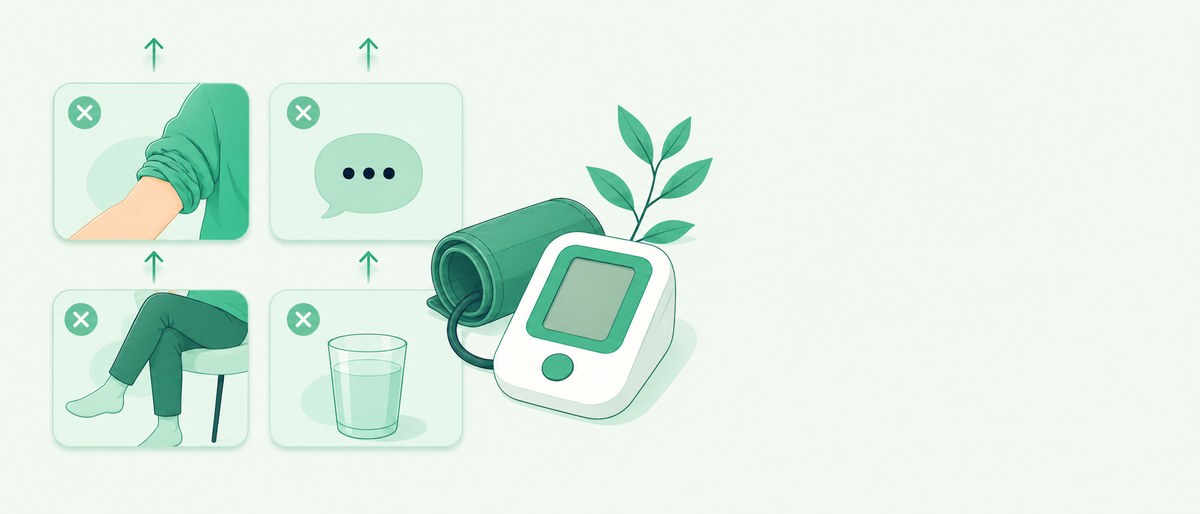
The effect is temporary but large enough to matter, especially if you are tracking your readings closely at home. The table below puts the bladder next to a few other everyday factors so you can see where it ranks.
| Factor during measurement | Typical effect on systolic |
|---|---|
| Full bladder | +10 to 15 mmHg |
| Talking or active listening | +10 mmHg |
| Unsupported back or feet | +6 to 10 mmHg |
| Crossed legs | +2 to 8 mmHg |
| Arm below heart level | +8 mmHg or more |
A single full bladder can outweigh several smaller mistakes combined. If you measure first thing in the morning after a long night, which is exactly when home-monitoring guidance suggests taking a reading, your bladder is often at its fullest, so the timing works against you unless you use the bathroom first.
Why a stretched bladder pushes pressure up
Your bladder wall is rich in sensory nerves. As it fills and stretches, those nerves signal the brain, and beyond the familiar urge to go, the body responds with a low-grade stress reaction. Heart rate and vascular tone tick up, and blood pressure follows. Researchers can watch this happen in real time: the fuller the bladder, the higher the sympathetic nerve firing, and the two rise and fall together.
The takeaway is that the rise is real physiology, not a measurement glitch, and it is fully reversible. The moment you empty your bladder, the reflex switches off and your pressure returns to its true resting level within minutes. Nothing about a full-bladder reading reflects your actual cardiovascular health. It just reflects the fact that you needed the bathroom.
Does this mean a full bladder is dangerous?
For a healthy person, an occasional full-bladder blip is harmless and disappears the moment you relieve yourself. The concern is not the brief rise itself but being misled by it. A reading inflated by a full bladder can nudge you into a higher category on paper, worry you without cause, or, if it happens at a clinic, feed into a treatment decision based on a number that was never your baseline.
There's one group worth a mention. People with an overactive bladder, who live with frequent urgency, may experience these transient pressure rises more often. That's a reason to measure with an empty bladder rather than a reason to panic. If a genuinely high reading above 180/120 mmHg does not come down after emptying your bladder and resting quietly for a few minutes, and especially if you have symptoms like chest pain, shortness of breath or trouble speaking, seek medical help immediately.
The simple fix
Build one step into your routine: use the bathroom before you sit down to measure, ideally a few minutes ahead so you are settled and rested. Pair it with the rest of the standard setup, quiet room, back and feet supported, arm at heart level, and no talking, and you remove the biggest sources of a falsely high reading in one go. Our checklist for an accurate reading at home walks through the full sequence, and the guide to why your readings vary from one moment to the next covers the other factors that move the number.
Keeping a consistent routine is where a log earns its keep. This is what BPlus is built for. You enter each systolic, diastolic and pulse reading by hand, or scan your monitor's display with the camera so the numbers go in without typing, and the time and date are stamped for you automatically. Add a quick note such as "emptied bladder first" to any reading, then let the app chart your trend and sort each entry into the standard categories. Over a couple of weeks you can see whether your morning numbers settle once the bathroom step becomes a habit. BPlus keeps everything on your device, works offline and needs no account. It is a wellness and logging tool, not a medical device: it does not measure, diagnose or treat blood pressure, and it is no substitute for professional care. What it does is make a controllable variable like this easy to see and fix.
Mini-FAQ
How long before measuring should I empty my bladder? Just before you sit down is fine, ideally a few minutes ahead so you can settle into five minutes of quiet rest without interruption. The rise from a full bladder fades within minutes of relieving yourself, so there's no need to wait long, only to make sure the bladder is empty when you take the reading.
Does a full bladder affect readings at the doctor's office too? Yes. The same reflex operates anywhere, which is why clinics are advised to have patients empty their bladder before a measurement. If you arrive needing the bathroom, ask to go first so the reading reflects your true pressure rather than the urgency.
Can holding urine cause lasting high blood pressure? No. The rise is transient and reverses once you empty your bladder. It is a short-term measurement factor, not a cause of chronic hypertension, though people with frequent urinary urgency may see the temporary effect more often.
Which raises pressure more, a full bladder or caffeine? They're in a similar range. A full bladder adds roughly 10 to 15 mmHg systolic, while a moderate dose of caffeine raises it by a comparable amount. Both are temporary and both are easy to control by timing your reading, which is why measurement guides tell you to handle each one before you sit down.
Sources
Keep your readings in one calm place
BPlus does the logging with you: record by hand or scan your monitor, watch your trends, and export a doctor-ready report when you need one.
Medical disclaimer. BPlus is a wellness and informational tool that helps you record, organize and understand your blood pressure readings. It is not a medical device and does not diagnose, treat, cure or prevent any disease. BPlus does not measure blood pressure on its own. Always consult a qualified healthcare professional. Readings are not a substitute for a clinically validated blood pressure monitor.