Common Mistakes That Raise Your Blood Pressure Reading
A full bladder, a cuff over clothing, or talking can each inflate a home reading by 5 to 50 mmHg. Here is each one and its quick fix.
This article is educational content, not medical advice. Always talk to a healthcare professional about your blood pressure.
Most falsely high home readings come from how you sit and prepare, not from your health. The usual culprits are a full bladder, an unsupported back or arm, crossed legs, a cuff wrapped over clothing or sized wrong, and talking during the measurement. Fix those and your numbers drop back to your true baseline, often without any change to your body at all.
Each of these mistakes has a measured cost. Drawing on the American Heart Association and Harvard Health, a full bladder adds roughly 10 to 15 mmHg, an unsupported back 6 to 10, an unsupported arm up to 10, crossed legs 2 to 8, and talking up to 10. A cuff placed over a sleeve can shift the reading by 5 to 50 mmHg, and a cuff that is too small by 2 to 10. None of these change your actual blood pressure. They change the number the monitor reports, which is why the same person can look "elevated" one minute and "normal" the next.
The mistakes, ranked by how much they add
Every item below inflates the reading. The fix is usually a five-second adjustment before you press start.
| Mistake | Typical effect | The fix |
|---|---|---|
| Cuff over clothing | 5 to 50 mmHg | Put the cuff on a bare upper arm |
| Full bladder | 10 to 15 mmHg | Empty your bladder first |
| Cuff too small | 2 to 10 mmHg | Match the cuff to your arm size |
| Unsupported back | 6 to 10 mmHg | Sit back in a chair, feet flat |
| Unsupported arm or arm too low | up to 10 mmHg | Rest the arm on a table at heart level |
| Talking during the reading | up to 10 mmHg | Stay silent and still |
| Crossed legs | 2 to 8 mmHg | Uncross, keep both feet on the floor |
Numbers are typical ranges from the American Heart Association and Harvard Health; the exact amount varies from person to person.
Small errors stack into a big one
No single mistake here is dramatic on its own. The problem is that they rarely happen one at a time. Picture a common evening reading: you sit on the edge of the sofa with no back support, one leg crossed, arm hanging at your side, cuff over a sleeve, and you answer a question from across the room while the monitor inflates. Add the modest ends of those ranges together and you can push a reading 20 to 30 mmHg above your real number.
That is enough to move you across a whole category, from normal into what looks like Stage 1 or Stage 2, on a body that never changed. This is why one alarming reading is rarely worth panic. Before you worry about a high number, rule out the setup, then retake it. If your readings swing widely from one sitting to the next, our guide to why readings vary covers the same causes in more depth.
Fix the setup before you sit down
Two of the biggest errors happen before the cuff even goes on.
Empty your bladder first. A full bladder is one of the larger single distortions on the list, worth about 10 to 15 mmHg per the AHA, and it's the easiest of all to remove. Second, keep the half hour before a reading clean: no caffeine, no smoking or vaping, no exercise, and no heavy or salty meal. The CDC notes each of these temporarily raises blood pressure, so a reading taken right after coffee or a brisk walk reflects the stimulant, not your baseline.
Then rest. Sit quietly for five minutes before you measure, feet flat, without scrolling your phone or watching tense TV. Rushing straight from activity to the cuff is one of the most common reasons a first reading looks high. Our guide on how long to rest first covers why five minutes is the standard.
Fix your posture and the cuff
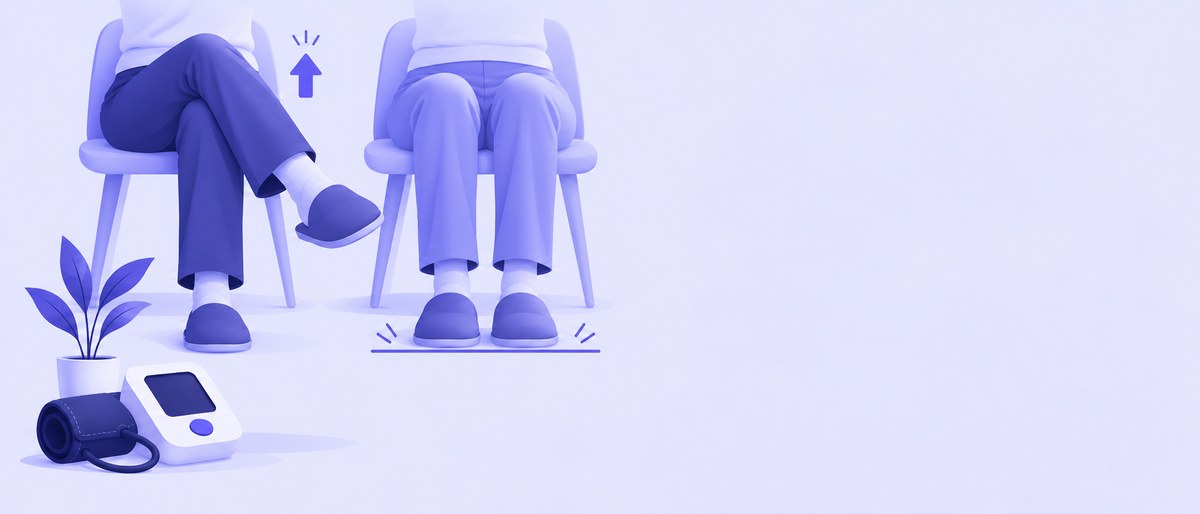
Once you sit, the American Heart Association recommends a specific position: back supported against the chair, both feet flat on the floor, legs uncrossed, and the measuring arm resting on a table so the cuff sits at the level of your heart. An arm that dangles or that you hold up yourself both push the number up. If the cuff ends up below heart level, the reading reads high; above, it reads low.
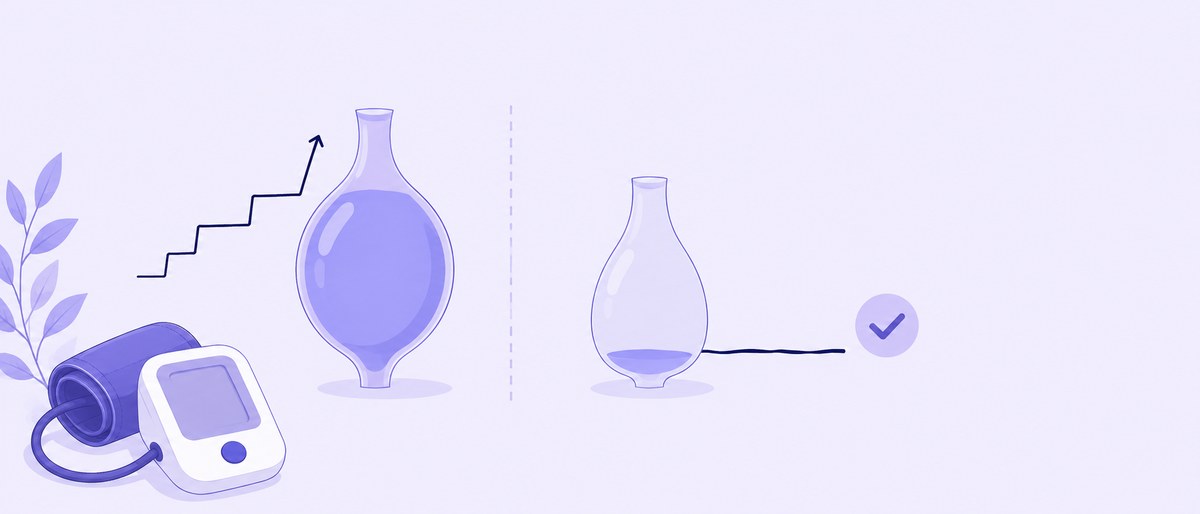
The cuff itself causes two of the sharpest errors. Wrap it directly on a bare upper arm, never over a shirt or a pushed-up sleeve that bunches and squeezes. And use the right size. The CDC and AHA both stress that a cuff too small for your arm reads falsely high, sometimes by 10 mmHg or more. Measure your upper arm once and match it to the cuff range; our cuff size chart shows how.
Stay silent and still during the reading
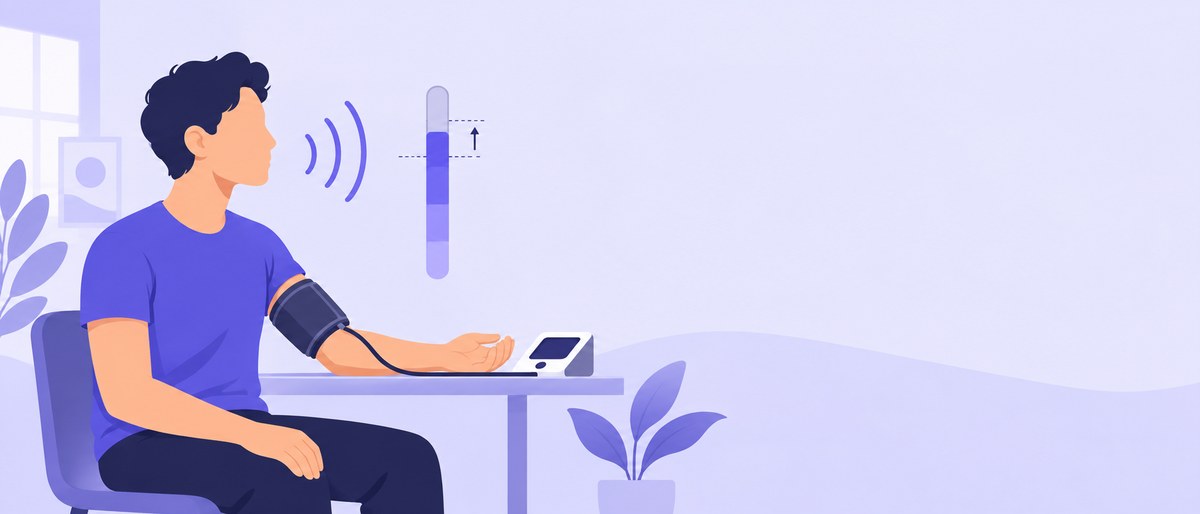
The measurement isn't over until the cuff fully deflates, so what you do during those seconds counts. Talking, answering a question, or even actively listening can lift the reading by as much as 10 mmHg, according to the AHA. Fidgeting, tensing your arm, or holding your breath do the same. Sit still, breathe normally, and stay quiet from the moment you press start until the number appears.
Where a logging habit fits
Good technique only pays off if you can see the pattern it produces, and that is where a log helps. BPlus is a wellness and logging tool, not a medical device, and it never measures your blood pressure. You take the reading with your own cuff monitor, then record it.
Type in the systolic, diastolic, and pulse, or scan your monitor's display with the camera so the numbers land without typing. Each entry is stamped with the time, date, and arm, and you can add a note like "emptied bladder, rested 5 min" to flag a clean reading versus a rushed one. Over time the app charts your trend, sorts each reading into the widely used color-coded categories, and exports a doctor-ready PDF or CSV. Everything stays on your device, with no account required.
Frequently asked questions
Which mistake raises the reading the most? Wrapping the cuff over clothing has the widest range, up to 50 mmHg in some cases, followed by a full bladder at 10 to 15 mmHg. Both are simple to fix: bare the upper arm and empty your bladder before you sit down.
If I make a mistake, should I throw out the reading? Yes. If you realize the cuff was over a sleeve, you were talking, or your arm was hanging, discard that number and take a fresh reading once you have corrected the setup. A single distorted reading isn't useful, and keeping it only muddies your trend.
How many of these errors happen at the doctor's office too? Several. Rushed rooming, a cuff over a sleeve, an unsupported arm, and conversation during the reading are common in busy clinics. This is one reason a calm, correctly taken home reading can be a valuable comparison to bring to your appointment, covered in taking an accurate reading at home.
Do these mistakes make my blood pressure actually go up? No. They inflate the measured number without changing your true blood pressure, except for short-term triggers like caffeine or exercise, which do raise it briefly. Either way, the reading no longer reflects your resting baseline, which is what you are trying to track.
The short version
Most falsely high home readings trace back to a handful of fixable setup mistakes: a full bladder, a cuff over clothing or sized wrong, an unsupported back or arm, crossed legs, and talking. Each adds a few to many mmHg, and because they stack, a careless reading can look a full category worse than your true number. Empty your bladder, skip caffeine and exercise for 30 minutes, rest 5 minutes, sit back with feet flat, put the cuff on a bare arm at heart level, and stay silent. If a carefully taken reading still reaches 180/120 mmHg or higher and stays there on a repeat, seek medical help immediately.
Sources
Keep your readings in one calm place
BPlus does the logging with you: record by hand or scan your monitor, watch your trends, and export a doctor-ready report when you need one.
Medical disclaimer. BPlus is a wellness and informational tool that helps you record, organize and understand your blood pressure readings. It is not a medical device and does not diagnose, treat, cure or prevent any disease. BPlus does not measure blood pressure on its own. Always consult a qualified healthcare professional. Readings are not a substitute for a clinically validated blood pressure monitor.