Morning vs. Evening Blood Pressure Readings Explained
Blood pressure runs on a daily clock: it surges after you wake and eases by night. Here is why morning and evening readings differ and when to take each.
This article is educational content, not medical advice. Always talk to a healthcare professional about your blood pressure.
The thresholds on this page follow the ACC/AHA guideline used in the United States, which sets high blood pressure at 130/80 mmHg. Other bodies differ: ESH in Europe and NICE in the UK still define it at 140/90 mmHg. Check the guideline your own clinician uses.
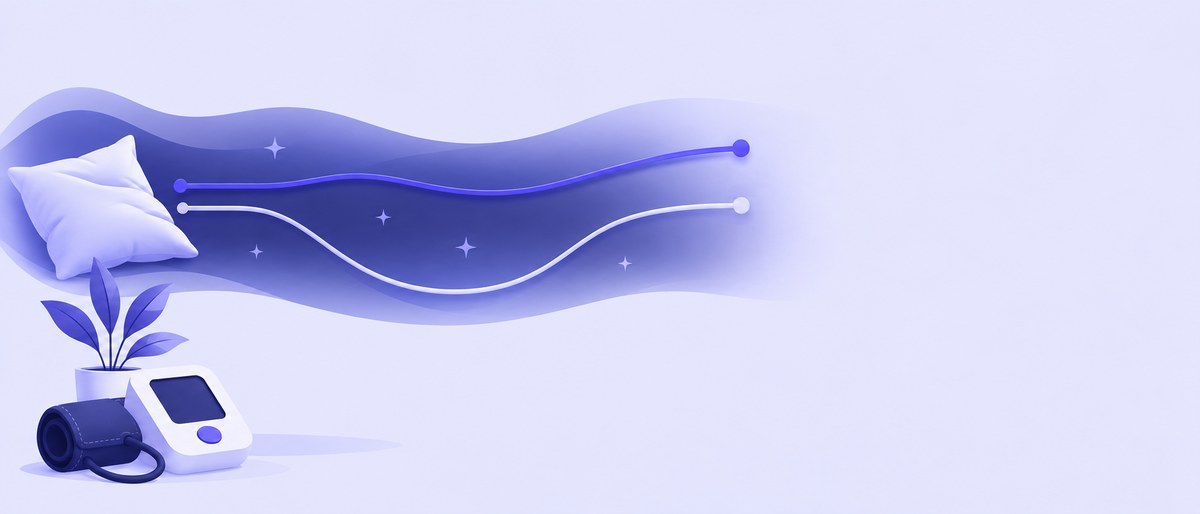
Blood pressure is not one number; it moves on a daily rhythm. It usually sits at its lowest during sleep, climbs sharply in the hour or two after you wake (the "morning surge"), stays fairly steady through the day, and drifts down again toward night. That's why a morning reading and an evening reading can look different on the same day, and why neither one alone tells the whole story.
The daily swing is real and measurable. Overnight, blood pressure normally dips 10% to 20% below the daytime average, then rebounds with the morning surge as you get up and get moving, according to the American Heart Association. For that reason morning numbers often read higher than evening ones, though the pattern varies from person to person. The two windows are complementary, not interchangeable, which is why the AHA recommends taking readings in both the morning and the evening rather than picking just one. Do it the same way each time and you get a stable picture instead of a single snapshot pulled from a moving target.
Morning vs. evening readings at a glance
The two windows answer slightly different questions. This table lines them up:
| Morning reading | Evening reading | |
|---|---|---|
| When | Before medication, breakfast, or caffeine | Before supper, hours after any coffee |
| Typical pattern | Often higher, catches the morning surge | Often a touch lower as pressure eases |
| Best for | Baseline near your daily peak | Confirming control across the whole day |
| Take it the same way | Yes, same time daily | Yes, same time daily |
Notice the last row. Consistency in timing matters more than which slot you think is "correct," because a stable routine is what lets you compare one week to the next.
Why is morning blood pressure often higher?
Your body runs on a circadian clock, and blood pressure tracks it. During sleep the system quiets down and pressure falls to its overnight low. As you wake, stress hormones like cortisol rise, your heart rate picks up, and blood vessels tighten, pushing pressure up in a short window often called the morning surge. Add the caffeine in that first cup of coffee, which the AHA says can nudge pressure up temporarily, and morning numbers can read noticeably higher than the rest of the day.
This is exactly why measurement rules exist. The AHA advises avoiding caffeine, exercise, and smoking for at least 30 minutes before you measure, and taking the morning reading before any medication or breakfast. Skip those steps and you're not measuring your baseline; you're measuring your coffee.
Is evening blood pressure lower?
For many people, yes, evening readings drift a little lower than morning ones as the surge fades and the day winds down. But "lower" is not the point. The evening slot is valuable because it captures your pressure after a full day of activity, meals, and any medication, so it shows whether control holds up across the whole 24 hours rather than only first thing.
Evening readings can also flag a pattern a single morning check would miss. Some people read fine in the morning but elevated later, and only a second daily window catches it. That is the whole reason guidelines favor twice-daily monitoring over a single reading whenever you can manage it.
What time should you measure blood pressure?
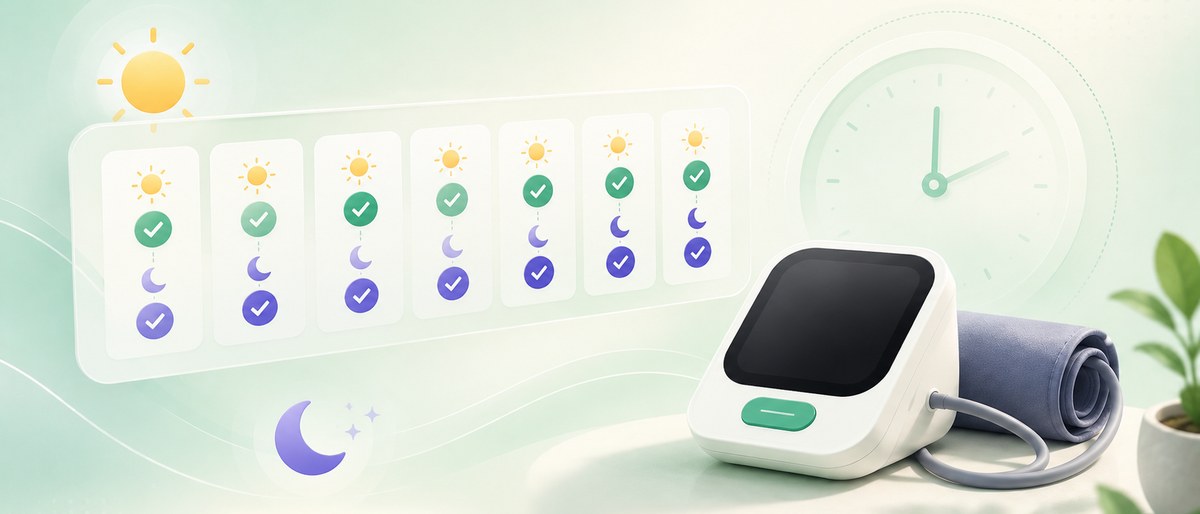
There's no single magic minute, but there is a reliable routine. The American Heart Association recommends two readings a minute apart in the morning, before medication and breakfast, and two more in the evening, at the same times each day. Before each session, empty your bladder, sit quietly for five minutes with your back supported and feet flat, and rest your arm on a table at heart level with a correctly sized cuff.
Run that for seven straight days and you collect 28 readings instead of one. Averaging them, usually after dropping the first day, smooths out the normal minute-to-minute noise and gives your clinician numbers worth acting on. Under the 2017 ACC/AHA guideline, normal is below 120/80 mmHg, elevated is 120 to 129 systolic, and stage 1 hypertension begins at 130/80. If any reading ever lands above 180 and/or 120 mmHg, that is the Hypertensive Crisis range; seek medical help immediately.
Does it matter which arm or position?
It can, which is why the rules ask you to standardize both. Readings taken with your back unsupported, legs crossed, or the arm dangling below heart level tend to run high, so the point of a fixed routine is to remove those variables. Use the same arm each time, and if your first readings differ noticeably between arms, tell your clinician. Our guide on taking an accurate reading at home walks through the full setup.
The goal of all this isn't perfection on any one reading. It's a clean, comparable record over days and weeks, morning and evening, that shows what your pressure actually does.
How BPlus keeps morning and evening readings straight
Twice-daily monitoring produces a lot of numbers, and the hard part is keeping them organized, not taking them. BPlus is built for that. Log each reading in seconds by typing it in or scanning your monitor's display with the camera, and the app stamps the time, date, and arm automatically, so a morning entry never gets confused with an evening one.
Your readings turn into trends and color-coded categories over time, following the five widely recognized ranges, and daily measurement reminders help make sure neither slot slips. Before an appointment, export a doctor-ready PDF or CSV. Everything stays on your device, with no account required. See the features page for the full list, and our guide on how often to check for building the routine.
FAQ
Should I take my blood pressure in the morning or at night?
Both, if you can. The American Heart Association recommends two readings in the morning before medication and breakfast, and two in the evening, at the same times each day. Morning catches your pressure near its daily peak, evening confirms control holds across the day, and together they give a fuller picture than either alone.
Why is my morning blood pressure so high?
A morning surge is normal: pressure rises as you wake and stress hormones climb. Coffee, which can raise pressure temporarily, often adds to it. Measure before caffeine, medication, or breakfast for a true baseline. If your morning average stays at or above 130/80 mmHg across several days, share the log with your clinician.
How many days of readings do I need?
A common recommendation is seven straight days, two readings a minute apart each morning and evening, then averaging after you drop the first day. That gives 28 numbers instead of one nervous snapshot, which is what smooths out normal variation and shows your real out-of-office pattern.
Sources
- American Heart Association: Monitoring Your Blood Pressure at Home
- American Heart Association: The Rules for Measuring Blood Pressure, and Why They Exist
- Whelton PK, et al. 2017 ACC/AHA Guideline for High Blood Pressure in Adults, Hypertension
- Mayo Clinic: Get the Most Out of Home Blood Pressure Monitoring
Keep your readings in one calm place
BPlus does the logging with you: record by hand or scan your monitor, watch your trends, and export a doctor-ready report when you need one.
Medical disclaimer. BPlus is a wellness and informational tool that helps you record, organize and understand your blood pressure readings. It is not a medical device and does not diagnose, treat, cure or prevent any disease. BPlus does not measure blood pressure on its own. Always consult a qualified healthcare professional. Readings are not a substitute for a clinically validated blood pressure monitor.