Why Is My Blood Pressure Suddenly High? What to Check First
A sudden high reading is often the setup or a short-term trigger, not a change in your health. Check these first, re-measure once, and know when to get help.
This article is educational content, not medical advice. Always talk to a healthcare professional about your blood pressure.
The thresholds on this page follow the ACC/AHA guideline used in the United States (set in 2017 and kept in the 2025 update), which sets high blood pressure at 130/80 mmHg. Other bodies differ: ESH in Europe and NICE in the UK still define it at 140/90 mmHg. Check the guideline your own clinician uses.
A sudden high blood pressure reading most often comes from how it was taken or from something in the last half hour: talking, a full bladder, coffee, pain or stress. If you have symptoms such as chest pain or trouble speaking, seek medical help immediately. Otherwise, fix the setup, rest five minutes and measure once more, and if the repeat is above 180/120 (the AHA's emergency line), seek medical help immediately.
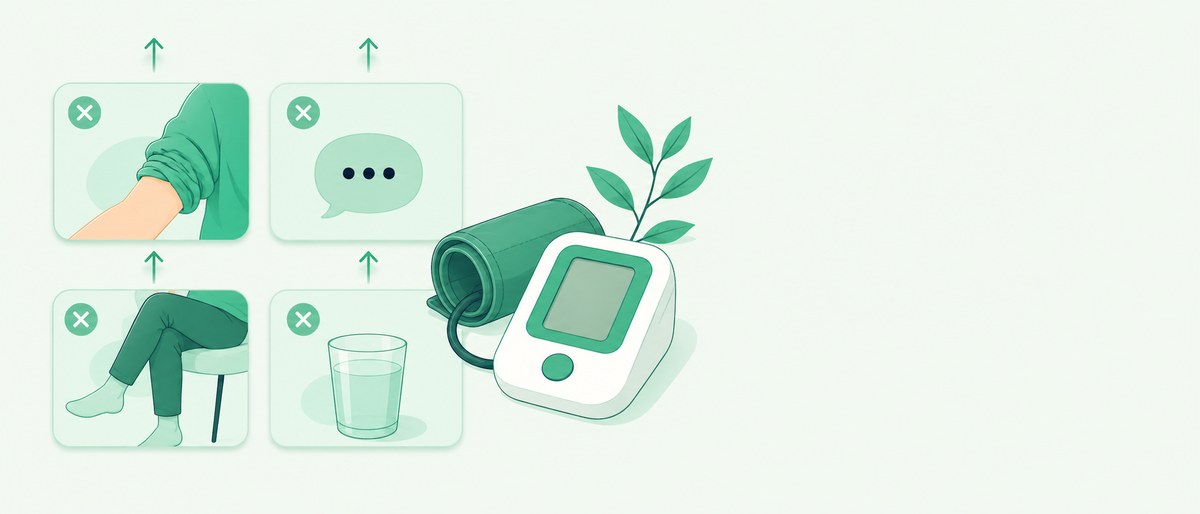
The short-term causes are well measured. The American Heart Association puts a full bladder at roughly 10 to 15 mmHg, talking at up to 10, crossed legs at 2 to 8, and a cuff over a sleeve at anywhere from 5 to 50 mmHg. Those errors stack, so one rushed reading can land a whole category above your real number. A lasting jump is a different question. A 2014 review in the European Heart Journal by Rimoldi, Scherrer and Messerli puts secondary hypertension, high blood pressure with an identifiable cause, at about 5 to 10% of people with hypertension, and names sleep apnoea as one of the most frequent causes. That's why a new pattern deserves a clinician's look, while a single odd number usually doesn't.
Is it the reading or is it you?
Start with the boring explanations, because they're the likeliest. Ask yourself what was different about this reading compared with your usual ones.
| Check | Typical effect on the reading | Quick fix |
|---|---|---|
| Cuff over a sleeve | 5 to 50 mmHg | Bare upper arm |
| Full bladder | about 10 to 15 mmHg | Use the bathroom first |
| Talking or listening during the reading | up to 10 mmHg | Stay silent until it finishes |
| Crossed legs | 2 to 8 mmHg | Both feet flat on the floor |
| Caffeine, smoking or exercise in the last 30 minutes | temporary rise | Wait 30 minutes |
| Pain, anger or a stressful call just before | temporary rise | Wait until you feel settled |
The mmHg figures come from the AHA page above. The 30-minute rule for caffeine, smoking and exercise is from the CDC's measuring guide. Our guide to common mistakes that raise a reading covers each row in more depth.
How should you re-check a sudden high reading?
Once you've ruled out the obvious, take one careful repeat rather than a string of quick ones. Measuring over and over until a lower number appears only teaches you to trust the reading you like best.
- Empty your bladder and sit in a chair with your back supported and both feet flat.
- Put the cuff on a bare upper arm, resting on a table at heart level.
- Sit quietly for five minutes without talking or looking at your phone.
- Take two readings about a minute apart, as the AHA recommends, and record both.
If your first reading was above 180/120, skip this routine and follow the emergency steps below instead.
If the first number is the highest, that's normal. Our piece on why the second reading is often lower explains why. Write down what was going on, too: "after an argument", "two coffees", "back pain". Those notes are what turn one confusing number into a pattern you can read later.
Short-term triggers that fade on their own
Plenty of everyday things lift blood pressure for minutes to hours and then let it fall back. Pain and stress both switch on the body's alarm response, and our posts on pain and blood pressure readings and stress look at how big and how brief that effect is. Cold weather, a poor night's sleep and a salty meal can nudge a reading up too.
Medicines and supplements belong on the list as well. Mayo Clinic names several that can raise blood pressure in some people, including decongestant cold remedies, NSAID pain relievers and some herbal supplements. If something new has entered your routine, mention it to your pharmacist or prescriber.
Don't start, stop or change any medicine, including a blood pressure medicine, on your own because of a reading. That decision belongs to whoever prescribed it.
When a sudden rise is worth a doctor's visit
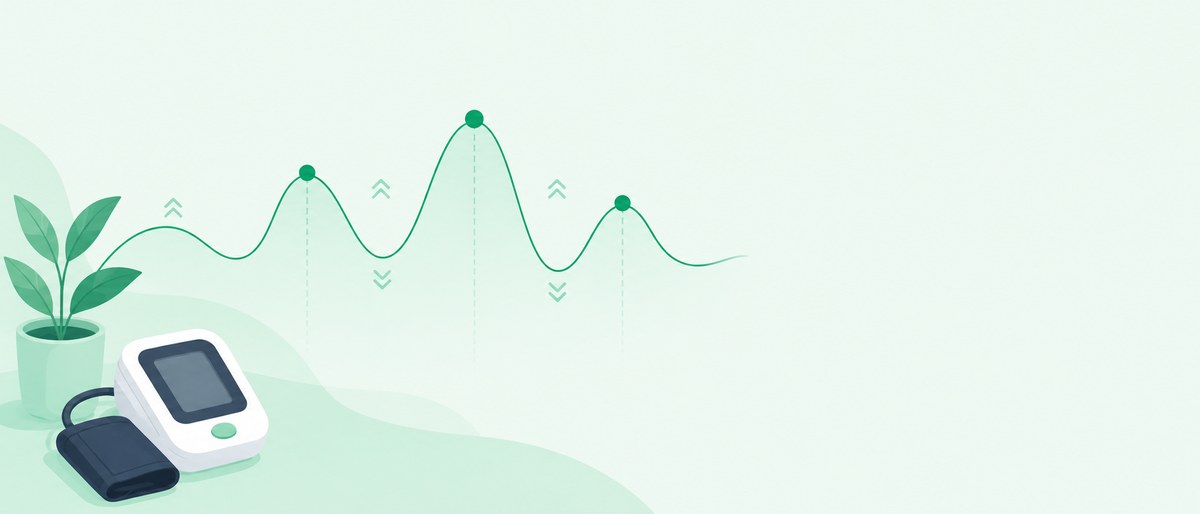
One high reading that settles on a careful repeat doesn't mean much on its own, because readings swing through the day. Our post on why blood pressure readings vary shows how wide that normal swing can be. What matters is whether the higher numbers keep coming back.
A fair way to find out is a week of steady home readings: 2 readings a minute apart, morning and evening, for 7 days makes 28 readings, in line with the AHA's advice to take two or three readings a minute apart each time. If that average sits above the line your clinician uses, book an appointment and bring the log.
What counts as high depends on the guideline. Under the ACC/AHA guideline, high blood pressure starts at 130/80. ESH and NICE use 140/90 for clinic readings.
Your clinician may also want to look for a cause. The Rimoldi review lists clues that point toward secondary hypertension, such as high blood pressure that appears quickly or becomes hard to control. Loud snoring with pauses in breathing is worth mentioning too, given how often sleep apnoea turns up. Those are questions for a clinician to work through, not something a home reading can answer.
When is a sudden high reading an emergency?
The safety line doesn't move, whatever caused the number. The AHA says a reading above 180/120 (either number is enough) needs attention right away. If you also have chest pain, shortness of breath, back pain, numbness, weakness, vision changes or trouble speaking, don't re-measure: seek medical help immediately and call emergency services.
Without symptoms, rest about five minutes and measure once more. If that repeat is still above 180/120, seek medical help immediately. Don't try to bring the number down with breathing exercises or by waiting to see if it settles. If the repeat comes down but stays high, contact your clinician promptly, and if symptoms appear at any point, seek medical help immediately.
Logging a surprise reading with BPlus
BPlus helps you keep the odd reading in context. Enter systolic, diastolic and pulse by hand, or scan your own monitor's display with the camera, and the time, date and arm are added for you. Put a note on the reading ("after coffee", "argument at work"), then use the trend charts and searchable history to see whether it was a one-off or part of a run. Daily reminders make the week of follow-up readings easier to stick to, and a PDF or CSV report gives your clinician the whole picture.
Your data stays on your device, the app works offline, and there's no account to create. BPlus is a wellness and logging tool, not a medical device: it doesn't measure, diagnose or treat blood pressure, and it's no substitute for professional care.
Common questions about a sudden high reading
Can anxiety about the reading make it higher? Yes. Worrying about the number is a form of stress, and stress can lift a reading for a while. That's one reason to rest quietly for five minutes before the repeat. If readings are calm at home but high at the clinic, ask your clinician about white-coat effects rather than assuming either number is the real one.
Should I go to the ER for one high reading? With symptoms like chest pain, shortness of breath, weakness or trouble speaking, seek medical help immediately. Without symptoms, rest five minutes and re-measure once; if it's still above 180/120, seek medical help immediately. Otherwise, fix the setup and contact your clinician if readings stay high over the following days.
Why is my blood pressure high in the morning all of a sudden? Morning readings can run higher, as our morning vs evening guide explains, and a full bladder, coffee or rushing can add to that. Measure before coffee, after using the bathroom, and after five quiet minutes. If careful morning readings stay higher than usual for a week, show the log to your clinician.
Sources
Your safety comes first
Chest pain, shortness of breath, weakness, numbness, vision changes or trouble speaking: call emergency services now. When you feel okay, a calm log helps your clinician see the full picture.
Free to start. No account needed.Also on App Store
Medical disclaimer. BPlus is a wellness and informational tool that helps you record, organize and understand your blood pressure readings. It is not a medical device and does not diagnose, treat, cure or prevent any disease. BPlus does not measure blood pressure on its own. Always consult a qualified healthcare professional. Readings are not a substitute for a clinically validated blood pressure monitor.